Conscious Consulting - Q&A With Konstantin Mudrack / Conscious Capitalism Spain

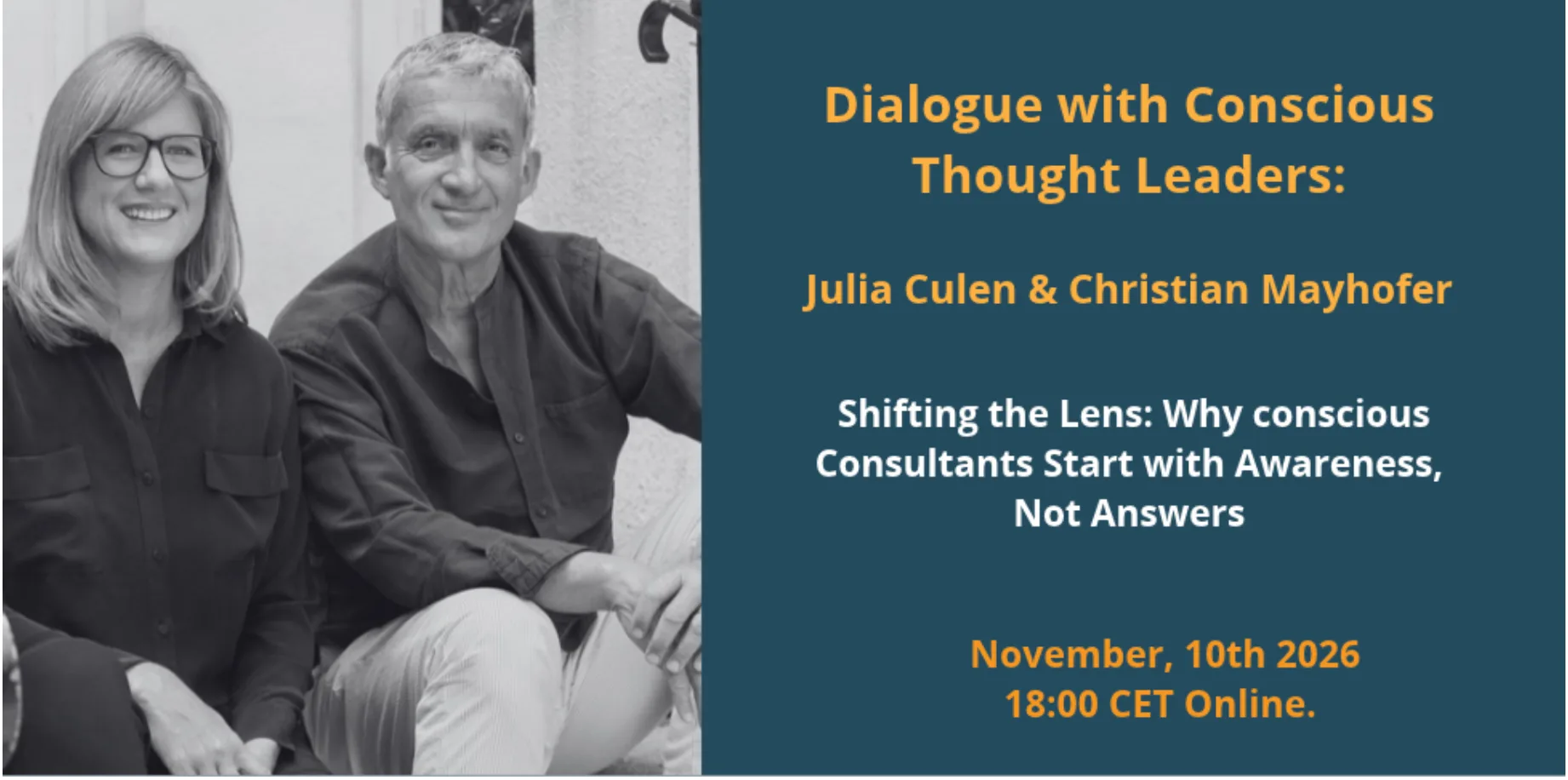
I met Konstantin Mudrack at a Conference on Conscious Leadership in Barcelona. He plays a main role at the Conscious Capitalism Chapter Spain and is a wonderful host of online and in-person events. I have participated in multiple events and was already a guest twice at his "Conscious Thought Leaders" Series.
He sent me all the questions he wanted to explore, and I did my best to answer them thoroughly. I think this Q&A is a good way to explain Conscious Consulting through conversation and make it more tangible and relevant. I’m glad I can share it. At the end of the Q&A, you’ll find a recording of the event it was prepared for.
I’d like to thank Konstantin for his continued interest in our work and for asking such thoughtful questions!
Theme 1: Uniqueness of Conscious Consulting - contrasting the conscious approach with traditional/Western consulting, mechanistic models, and output-driven practices.
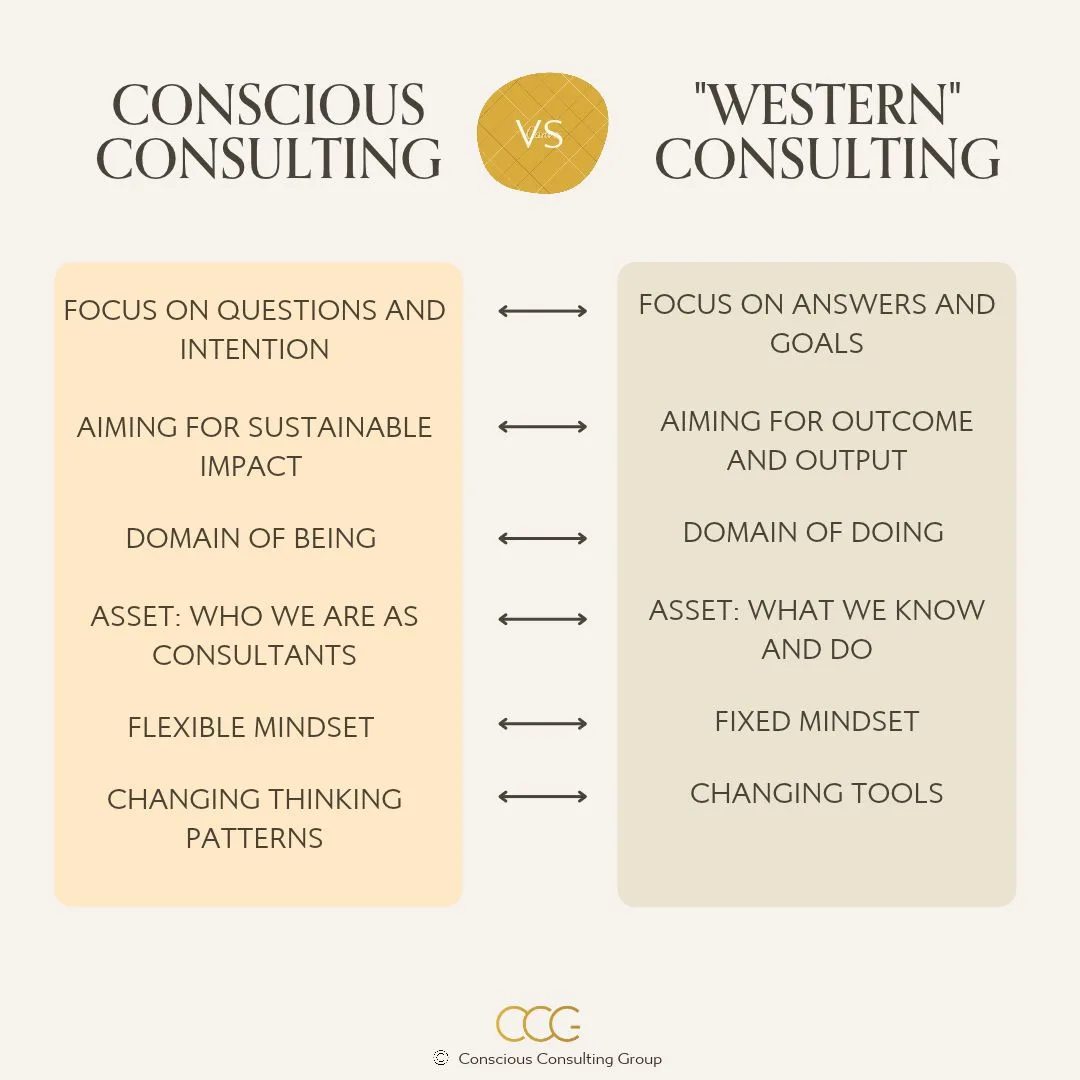
Konstantin:.Beyond "Outcome and Output": Traditional Western consulting is largely anchored in predefined deliverables, problem-solving recipes, and direct advice. Why and HOW does Conscious Consulting deliberately shift the locus of impact from the Domain of Doing to the Domain of Being?
Julia: The clarity and intentionality of our inner state shape the quality of our actions—and, in turn, their impact. What matters is not only what we do, but also the deeper intention behind it, our level of awareness, and the core beliefs and values guiding the person who makes a decision or takes action. Our approach addresses the level that shapes this underlying impulse.
Konstantin: The "Ink in Water" Metaphor: You describe true transformation not as a top-down, disruptive intervention, but as "ink in water". How does this gentle, incremental paradigm fundamentally challenge the traditional change-management industry?
Julia: “Ink in Water” is a metaphor I learned from our friend Yingzhao Liu. Consciousness and awareness are added as an “ingredient,” quietly changing the quality, depth, and intensity of every thought, action, and way of being. Transformation isn’t a flashy event; it’s the result of a continuous rise in awareness and consciousness. Suddenly, you see things you couldn’t see before—and gain fundamental, not superficial, tools that are almost radical.
For example: instead of seeing everything as a threat, you start seeing the opportunity and beauty.
Konstantin: The Role of Wisdom Traditions in Business: You openly incorporate concepts from Zen Buddhism, Advaita Vedanta, Daoism (such as "Gentle Action"), and Ayurveda into your business frameworks. How do you introduce these ancient principles to skeptical corporate executives without triggering resistance or sounding esoteric?
Julia: Because neither our identity nor our language is esoteric, we can talk about anything. One of our goals is to make the frameworks and teachings accessible and acceptable by using contemporary "non-spiritual" language. We’re very thoughtful about our wording and introduce principles at the right time. We don’t “convince” people or impose anything on people where they feel uncomfortable. Most of our clients have some contact with these teachings in private, via yoga, and are more open than one would think.
We also need to make sure the context is right, there’s enough openness, and we’re never pushy, because that always backfires. We need to consider company and country culture and personal culture. We shouldn't underestimate anyone
Konstantin: Transforming Mindsets vs. Implementing New Tools: Many clients hire consultants seeking agile frameworks, new governance structures, or methodologies like Holacracy. Why do you argue that changing tools without transforming the underlying thinking patterns will inevitably backfire?
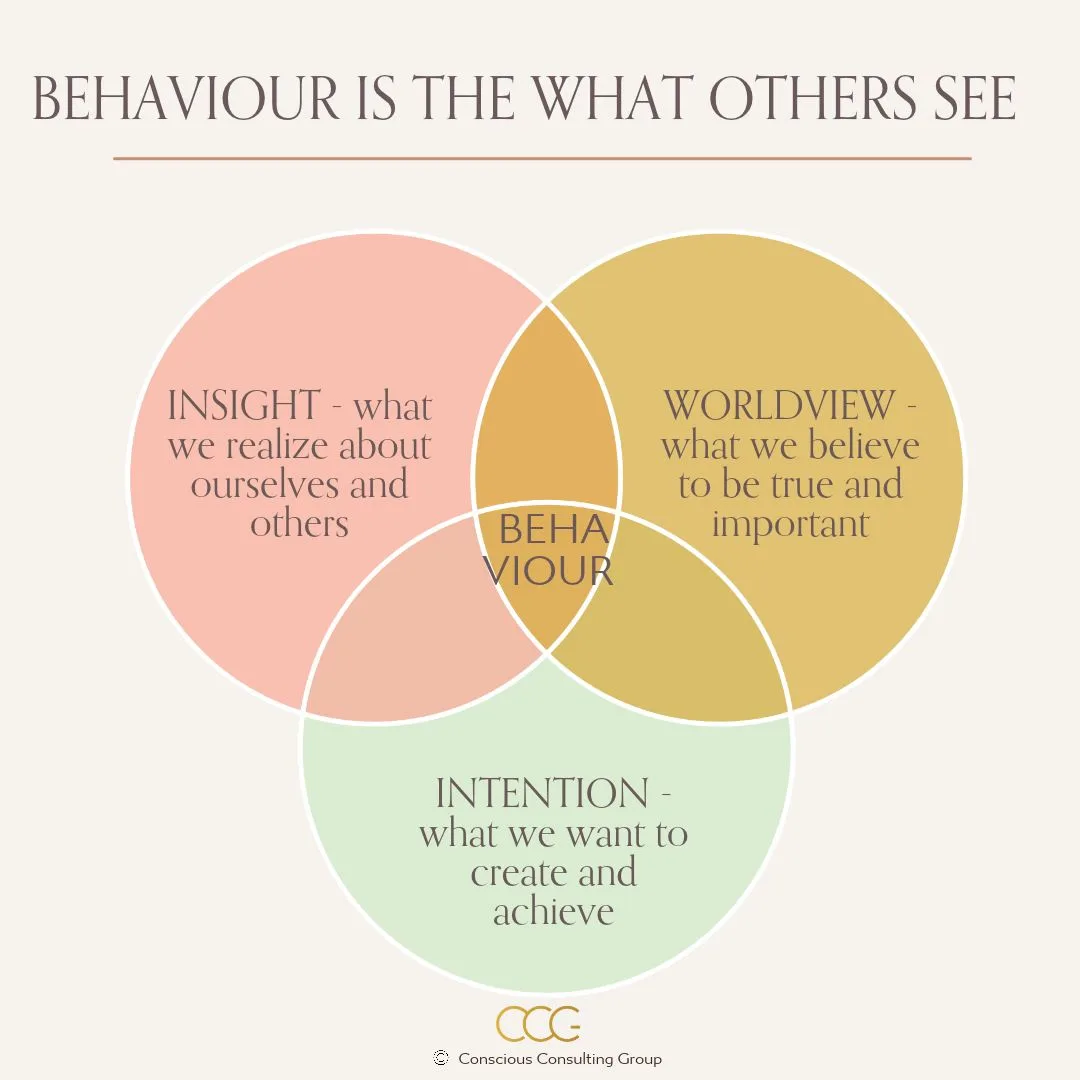
Julia: From where I stand, this is quite obvious: we—and our clients—have all had enough experience to know that new structures won’t change the underlying content. Structures are actually the result of thinking patterns: “Form follows Consciousness.” So if we change the structures without changing the “source,” the effort will fail. The old structures will eventually take over again or reappear in underground, parallel structures—the dark web of organizations, as we call it.
Konstanin: Reclaiming the Dignity of Consulting: You note that consulting is too often seen as an intermediate career step or viewed with skepticism due to hidden agendas. What is your vision for elevating consulting into a recognized, ethical calling that serves people, planet, and profit?
Julia: Conscious Consulting is our vision. Adding “Consciousness” to consulting, ink in the water, and finding out that the impact is fundamentally different.
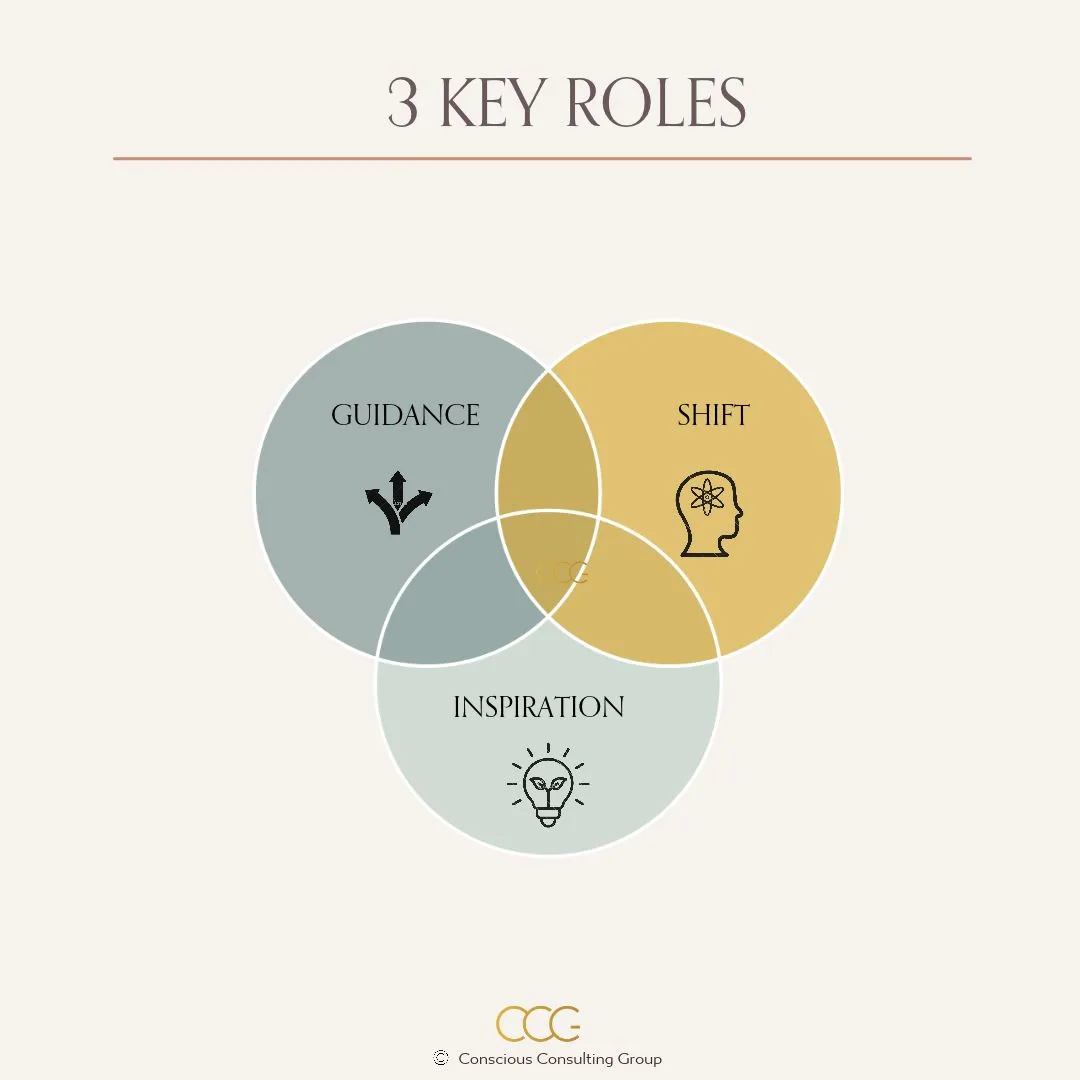
Theme 2: Qualities and Inner Conditions to Be a Conscious Consultant
Konstanin: "who we are when we engage with a client is our primary intervention." How does a consultant cultivate the internal capacity to hold tension, stress, and fear in the room without reacting out of unconscious habits?
Julia: Well, that is the thing: As a consultant, you will be in many difficult, stressful, and very challenging situations yourself, and your clients will be too. If you don’t have enough self-awareness through your personal and spiritual development, you won’t have the capacity to hold space for others. You will be triggered and get frustrated, angry, and stressed easily. A clear mind and an open heart, along with good boundaries, personal integrity, and presence- all of these values have to be role-modeled. There are not two identities: the person and the consultant.
A huge challenge for consultants is taming their ego and not inflating it through the work; otherwise, you will do more harm than good. It is essential to do your own work and understand: what is happening inside of me, why? And have the tools to regulate yourself and bring a calm, present, and compassionate energy toward yourself and the clients.
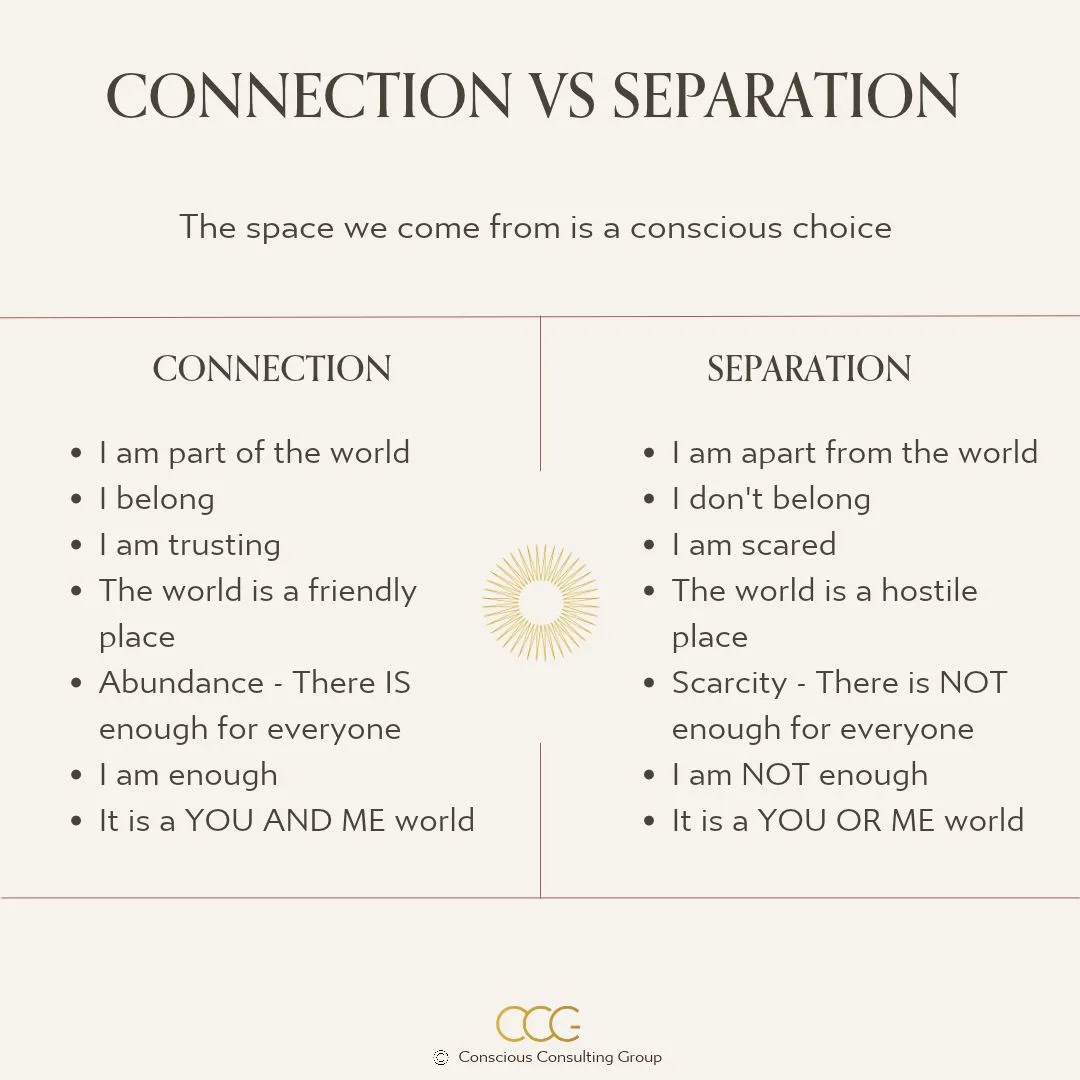
Konstantin: Focus on questions and intentions vs focus on answers and goals
Julia: Questions aren’t just there to be answered; they lay out possibilities and make room for—or limit—the kinds of answers we can give. What questions are we even allowed to ask? Some are taboo. Questions matter because they define the door and the invitation. Without questions, there’s no openness to change or novelty.
Konstantin: The Discipline of Holistic Well-Being: Burnout and exhaustion are rampant across professional services. Why do you consider personal self-care, mindfulness, and maintaining a healthy balance between "above the line" and "below the line" activities a professional ethical duty rather than a luxury?
Julia: This is what I learned in one of my consulting trainings: “The highest duty of consultant is to take care of themselves”. Otherwise, you can't help others; you will be a burden and add suffering and stress to an already stressed system. To be in a healthy and energetic/emotional equilibrium is highly important. You bring yourself to the situation as an ingredient, and you want to be "high quality": well rested, clear and strong.
Konstantin: Dismantling "Spiritual Bypassing": In the book, you explicitly warn against using contemplative or spiritual practices as a substitute for psychological shadow work. At the same time, you promote introspective and contemplative practices, yet they don’t seem to be sufficient in your experience. Are you suggesting that conscious consultants address their own trauma, ego needs, and emotional triggers before entering client systems? And how?
Julia: You need to do both: Ken Wilber talks about it. Personal development, working through traumas, inherited patterns, unconscious biases, and old wounds need to be addressed in therapy, full stop. Spiritual practice is important too, as it takes you to the next level, but you need to do the basics first.
Konstantin: Living in "Not-Knowing" and Beginner’s Mind: Consultants are routinely rewarded for projecting complete confidence and having all the answers. What inner discipline is required to genuinely manifest and practice Zen-inspired "Not-Knowing" while facilitating high-stakes transformations?
Julia: You need to be very confident and offer an “informed not knowing.” Not knowing doesn’t mean you don’t understand the situation or the tasks, or what to do. It means you don’t already know the best questions or the possible answers. You don’t put your filters on reality, because in that way, all you can do is iterate and replicate what you already know, the past. Nothing new can emerge.
Konstantin: The Shift from "Selling" to "Offering": Many purpose-driven consultants struggle with business development and self-promotion. How can practitioners shift from push-selling and scarcity into the magnetic "lavender in the garden" mindset of generous, grounded offering?
Julia: Again, the question is not what I want from my clients (money, assignments, prestige), but what I genuinely offer. What am I truly connected with, and how can I help potential clients see it? Offering means putting things—posts, content, myself—out there with the intention of attracting, not chasing. Chasing makes people run away; offering something interesting and valuable attracts them.
Also, for this, you need to work on your inferiority issues, fear of rejection, or control issues. Do the best you can, and trust that life also works toward your intention. I know this is super hard and counterintuitive, but for me this is the only way it works in the long run, without exhausting oneself and overriding personal boundaries.
Theme 3: Unique Relationship with Customers
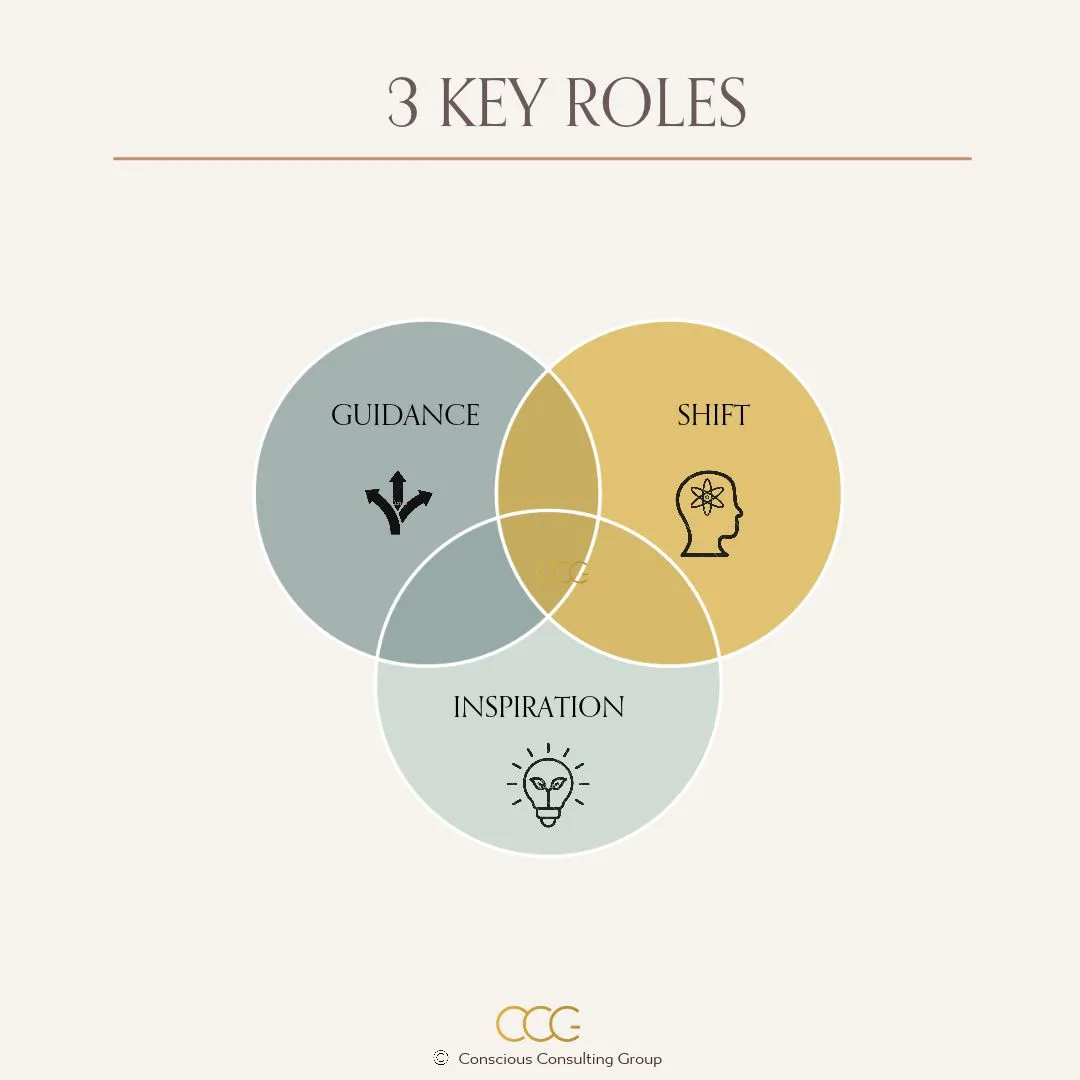
Konstantin: Direct Guidance vs. Professional Companionship: You distinguish conventional advisory work from "professional companionship"—a dedicated, paid, non-competitive presence. Explain in some detail such a relationship and how does this dynamic change the emotional safety and transparency available to a CEO?
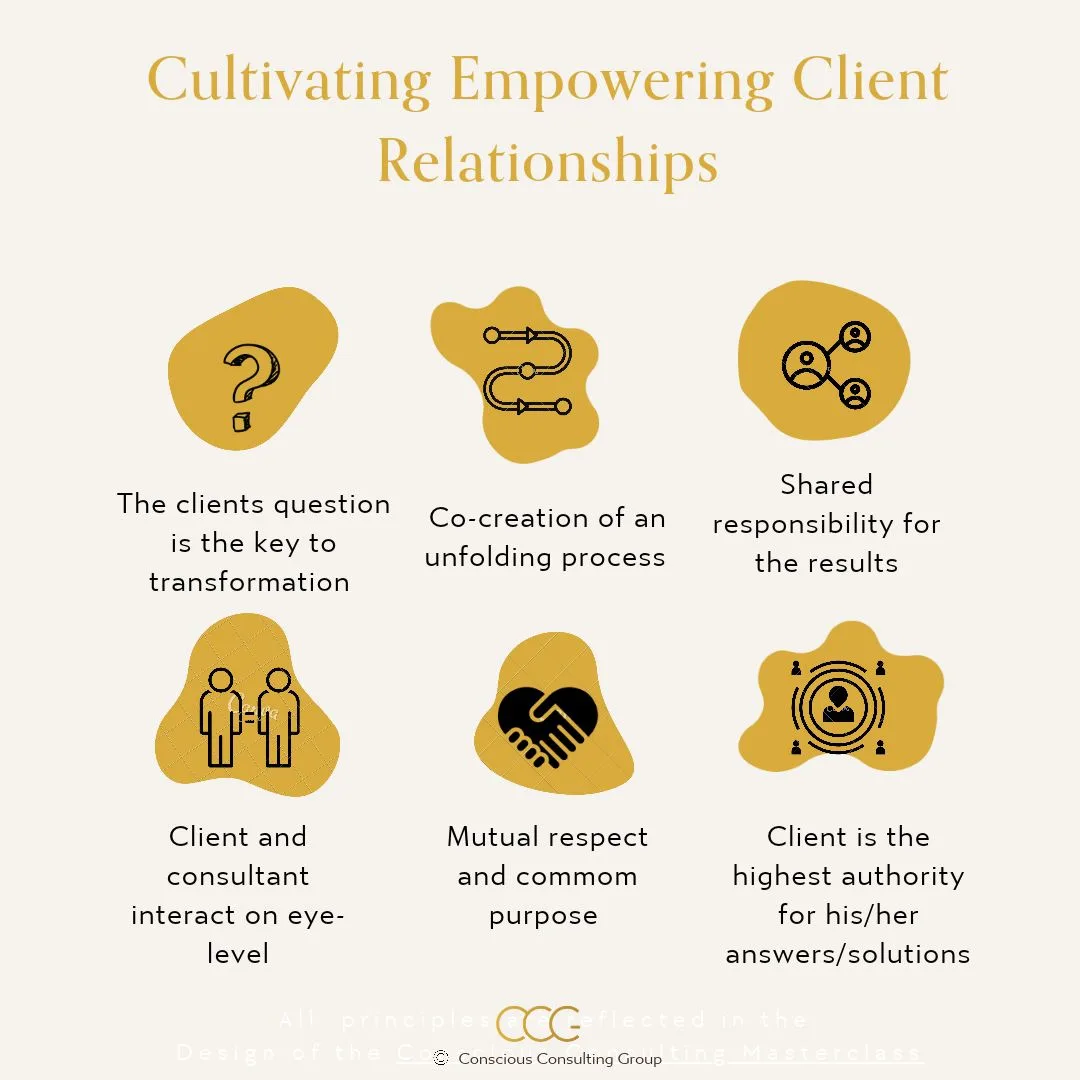
Julia: Some clients don’t want consultants who feel compelled to tell them what to do all the time. All they want is someone who deeply listens, holds up the mirror for them, and serves as a sparring partner. Someone who is neither before them as a guide nor after them like a follower or servant, but beside them at eye level, neutral and external, no one who will use anything against them, where they feel safe, calm, and present. From this, so much clarity and energy arise, often more than always putting more information and topics into them. It is one of the tools to create spaciousness for new things to emerge.
Konstantin: “Partnering at Eye Level”: Consultants frequently risk either deferring blindly to the client who pays them or falling into expert arrogance. How do you establish and continually renegotiate an authentic eye-level partnership with powerful boards and executives?
Julia: By clarifying the terms from the beginning: shared accountability, cooperation, clear roles, ground rules like respect, a contract that is fair for both parties, and the possibility for both sides to end the contract when they feel there is no value any more. Renegotiating the relationship means having regular feedback sessions with each other, both ways. How are we doing? Is there anything that should change or develop? Because the goal is to be successful together.
Konstantin: The Principle of "Caring Beyond the Contract": Clients frequently remark that you deeply care about them. Give us an example how “genuine care for the customer” is displayed … and where do you draw the healthy boundary between authentic human love/care and maintaining essential professional detachment?
Julia: For example, when we are there for them beyond the contract, sometimes even when they don’t have a budget (at least on a limited scale), we show that love is the secret ingredient no one can buy, given only freely. It means we deeply care about their well-being and see them as people, not as objects to be exploited or contracts to be fulfilled. We create a relationship that goes beyond business. For example, when we see they are looking for a good lawyer, we offer our network, connect them, or help their kids find a summer job with other clients. It is not only calculated; it is part of our understanding of who we are: if we can help, we do it, no matter what.
Konstantin: How do you “get” customers to accept your invitation and what prep does this imply for them.
Julia: We don’t "get" them to accept anything: we invite them, and it is up to them. We make it easy for them by giving them microtasks and asking them to try it out before they decide they don’t like it. Normally, it is not a problem; most people are quite keen and understanding.
Theme 4: Unique Tools and Methods - Examining practical frameworks of conscious consulting
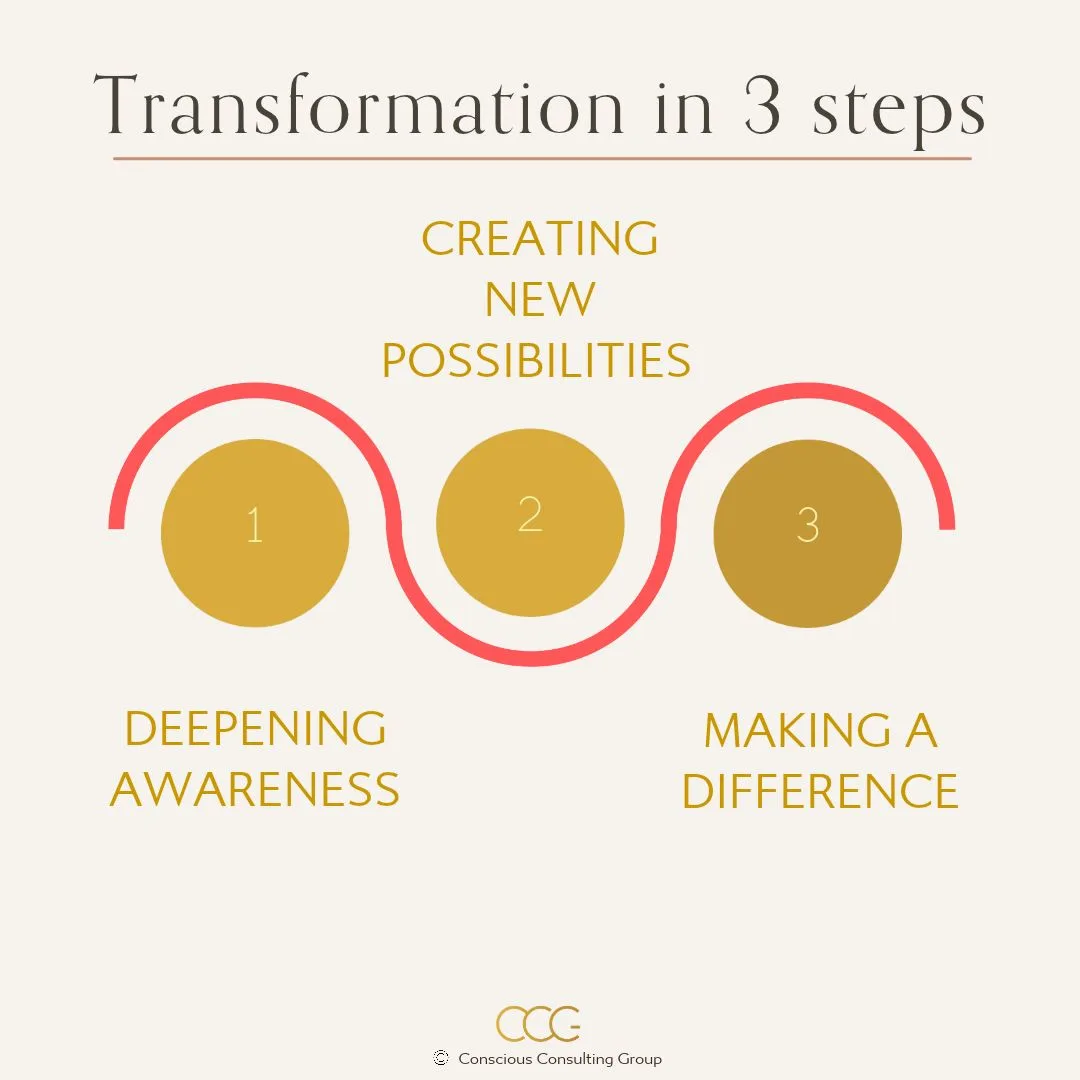
Konstantin: The 3-Step Iterative Consulting Approach: Walk us through how you move an organization through Deepening Awareness, Creating New Possibilities, and Making a Difference—and why rushing step 1 undermines the entire process.
Julia: Phase 1 involves analysis and interviews on our part. We meet with the organization and share feedback with the leadership team about things they may not be aware of. The aim is to identify blind spots and explain the typical dynamics we observe, the problems that arise, the disconnects we discover, hidden needs, and the human challenges that contribute to performance or innovation issues. We hold up a mirror so they can see where they still have “greens between their teeth” and remove them themselves.
We offer and continue to develop frameworks that help them dive deeper by examining the "problems" (are they the real problems?) and the underlying assumptions, and by uncovering hidden aspects and blind spots. Usually, these are workshops for 4-5 core leadership team members.
From our findings and insights, we ask: what is possible now? What new possibilities are arising? Sometimes it involves a learning journey in Silicon Valley and a day in a monastery. Sometimes something else is needed, or greater involvement.
I give you an example: when leadership gains a new understanding that "we want more communication" doesn't necessarily mean there isn't enough information available, but that people actually want to be listened to. That shifts the "Communication" strategy and formats in a new direction and opens up whole new dimensions of what that means. Leadership teams often respond at the wrong level to a "need" because they don't understand the true desire and intention behind it.
Step 3 is about "making a difference": implementing, getting things done, and making something new happen. Without action no impact.
Konstantin: Turning Phrases in Practice: You highlight Zen- and constructivist-inspired turning phrases such as "What if it did?" or "Does this happen TO me or FOR me?" Can you share a concrete example where a single rephrasing unlocked a stalled executive team?
Julia: Yes: “Safe enough to try” and “Good enough to start” this turning phrase helped the Swarovski Leadership team to try out a new operating model in a prototype way and improve along the way. What helps is to build in feedback loops. And it helped a friend to launch a watch start-up. He still keeps telling me that for him, this was the moment when he decided to go for it, and now he has a successful watch brand. Everyone should try it for big and small decisions. It gives you that final kick to say: yes, it is safe enough and good enough. The important word is "enough": it doesn't have to be perfect, 100%, but you also don't take risks without having some confidence it could work.
Another version is to give it a time frame: lets try it for 6 months, e.g. the new model and re-eveluate. That helps to make decisions easier and lighter
Konstantin: Energetic Working with Client Organizations: you refer to the ayurvedic diagnose of Vata/Pitta/Kapha as a way to balance energy. How do you translate and apply the three doshas—Vata (creative/flexible), Pitta (ambitious/competitive), and Kapha (structural/stable)—into a practical diagnostic lens for organizational dysfunction and balance?
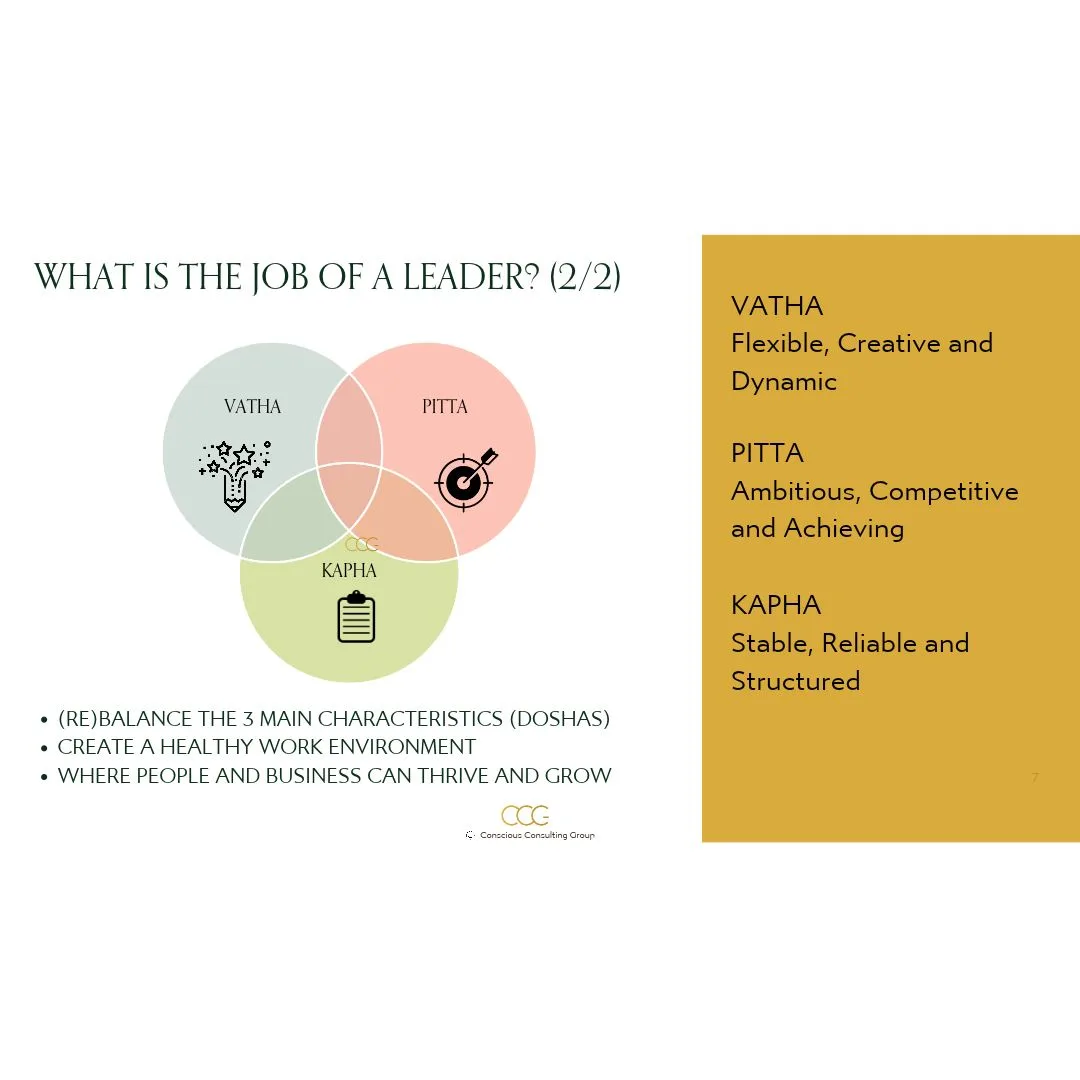
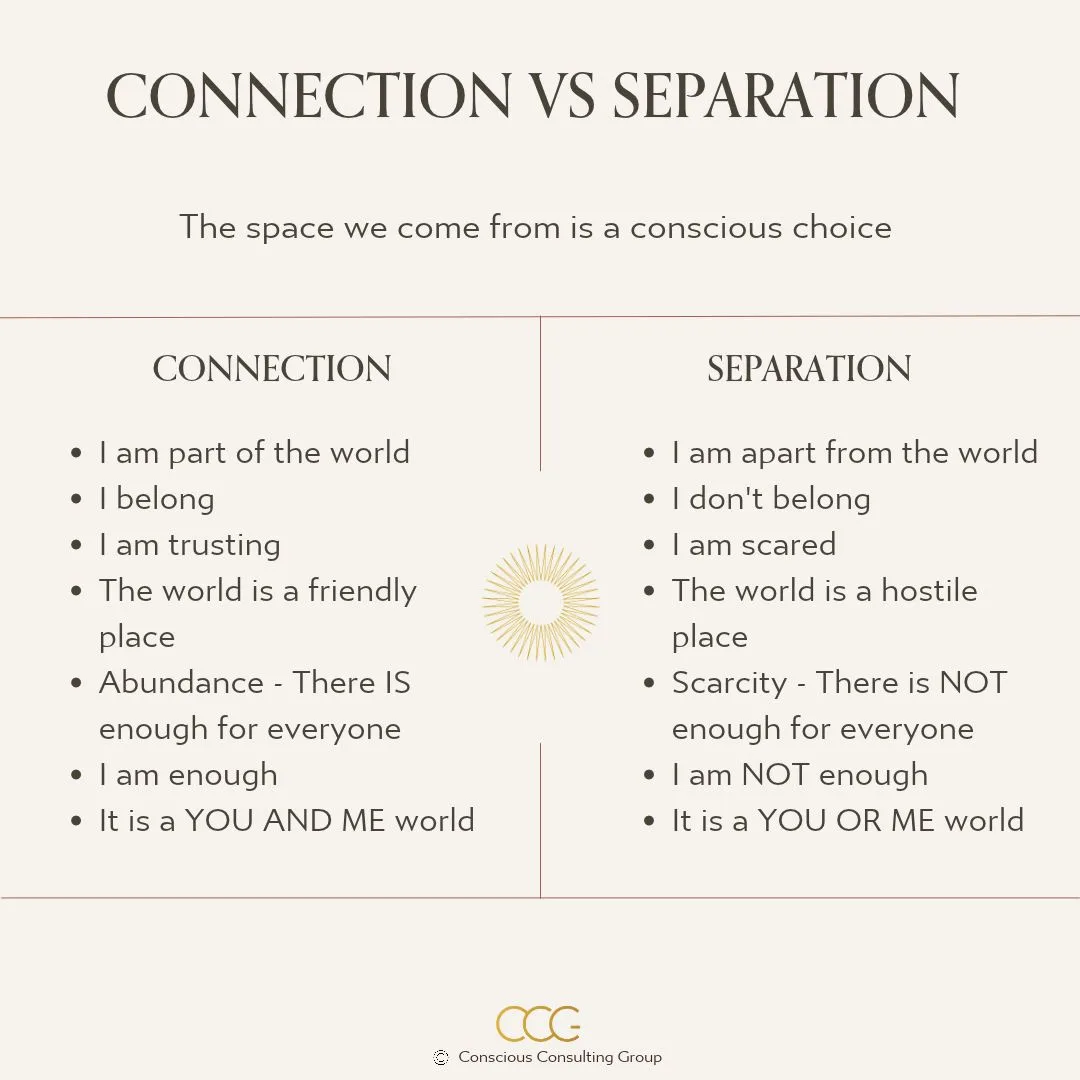
Julia: We use it in the analysis of corporate culture: for example, “blue light organizations” function really well at the level of Pitta, in stress, when there is a literal “fire,” but are really bad at providing boring stability, which is also needed.
Some organizations, e.g., have become very Kapha—too slow, too heavy, too lazy—and need more fire. We use our own energy: when an organization is super stressed, too much Vata, we bring in a calmer, slower energy and work formats. When they are very Kapha, we are more energetic and try to get them “off their asses”.
Konstantin: Designing Spaciousness and Energetic Settings: From off-site monastic spaces to outdoor walking sessions and conscious room setup, how do you use physical environments and emotional energetic work to enable or block mindset shifts?
Julia: Exactly as you say, form follows consciousness, but consciousness also follows form. Our mind works very differently in different setups and contexts, so we consciously choose the context we need. In very stressed organizations, taking them out into nature and quiet is gold. When it is very business-related and straightforward, we can also sit in a meeting room on-site. Sometimes, for creativity and relaxation, we like to use spaces that have a more private approach, like once we rented a private villa for a retreat, and did cooking together and sat down in the living room for the sessions.
Beauty is always good, though; it conveys harmony, safety, and a sense of order.
Konstantin: “Transformation” doesn’t happen under pressure when forced, but when we release and relax.
This sounds like making a square fit into a circle: guiding the customer from a place of high pressure, urgency, and need to control into a mindset of release and relaxation. How do you perform this magic?
Julia: We meet clients where they are. That sounds trivial, but it isn't. It means we have to feel and understand what is going on and attune our language, level of challenge, and energy accordingly. We have to sense and respond rather than come in and overpower the organization with our well-meant enthusiasm. This sometimes requires stepping back and observing. When everyone is super stressed, we “pace” first. We don’t make them calm down immediately; instead, we help them decompress, address the main pain points first, and, over time, reduce speed and increase space.
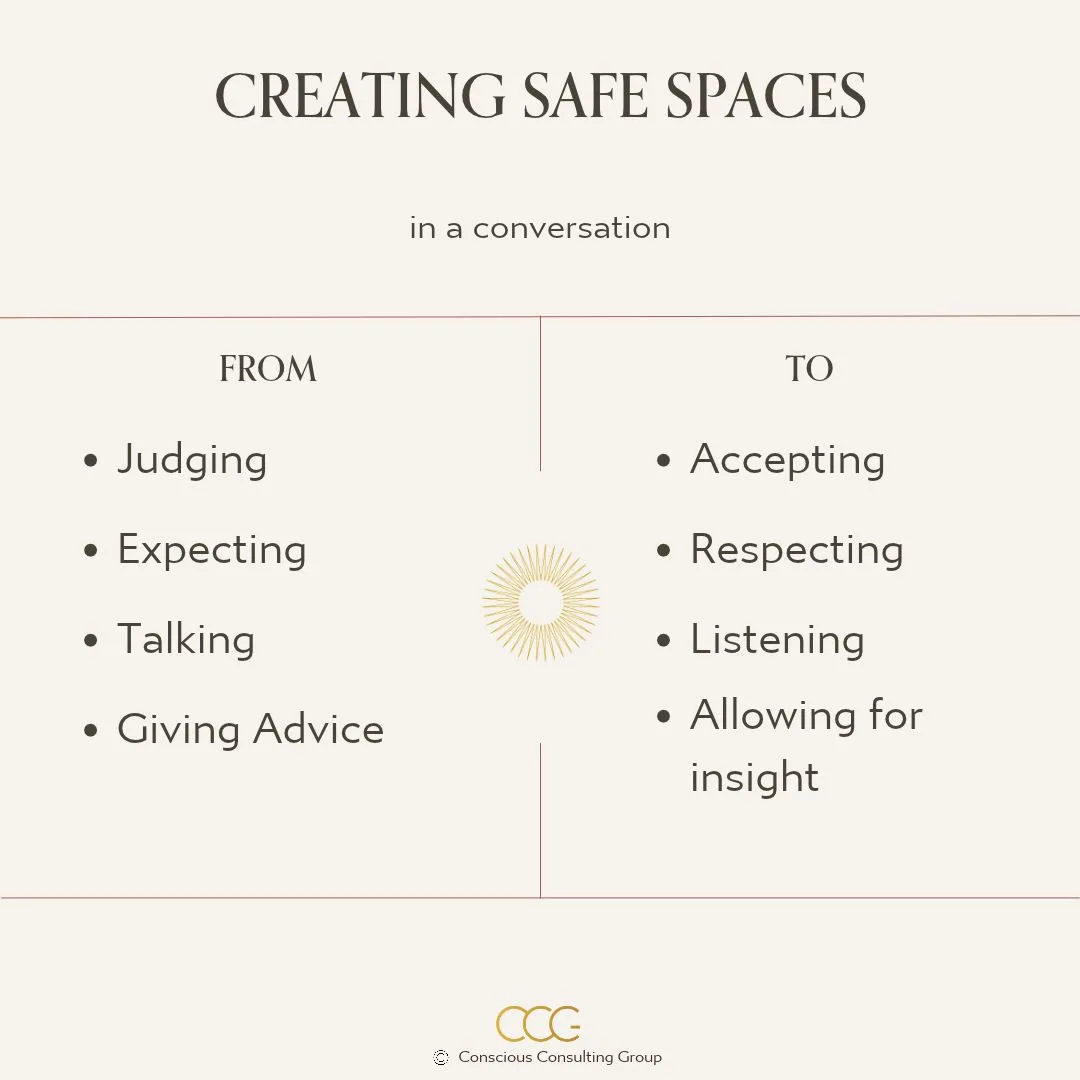
Konstantin: Creating Safe Spaces ("From-To"): You define a safe space not as comfortable silence, but as a shift from judging to accepting, from expecting to respecting, from talking to listening, and from giving advice to allowing insight. How do you actively facilitate this conversational dynamic in a room with deeply entrenched corporate politics?
Julia: First of all: for most people, silence is the most uncomfortable and threatening thing they know; they try to avoid it at all costs.
What we do is make entrenched corporate politics visible and conscious without judgment; we just ask whether they are more useful or more harmful. We try not to judge our clients in terms of right/wrong or good/bad, but to understand what is and be open to making new choices based on new criteria we work on together: what do we want? Where are we going? Is this dynamic, pattern, behavior helping or hindering us? So judgment is tied only to a desired outcome, not to morality.
Yes, we actively moderate it. For example, I was moderating a partner meeting with 50 Alpha guys in the room, and my job was to make sure everyone was heard and that the number 1 Alpha stuck to the rules. This already changes the dynamics. Sometimes it is more about what we do than what we say.
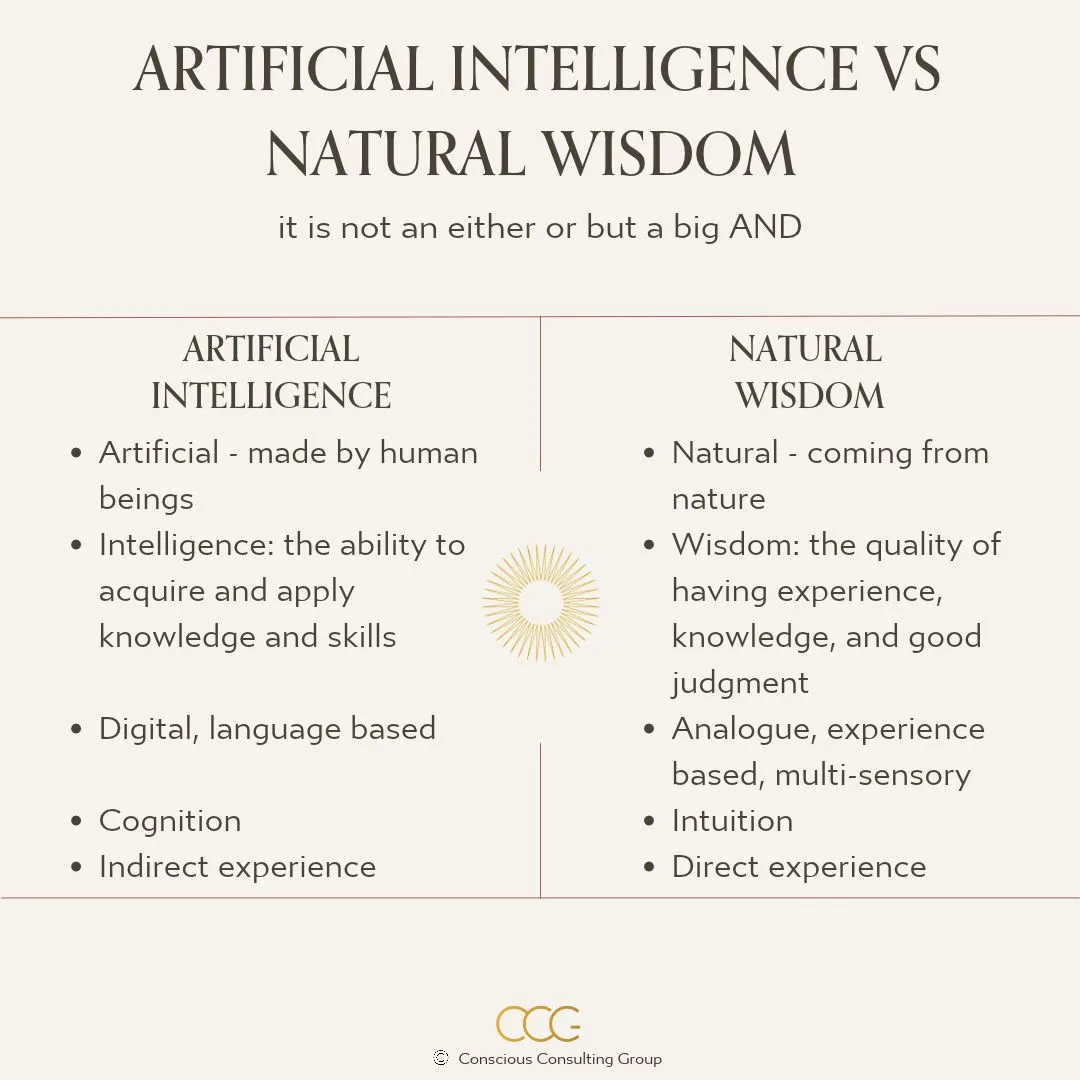
Konstantin: We need to talk about AI: how is it different from wisdom and why does wisdom matter in the age of AI?
Julia: AI is an extremely powerful tool, and it will amplify the level of consciousness, wisdom, and awareness of the people and systems using it. So we need to stay sovereign and maintain our agency with wisdom, compassion, and presence. That's our only chance to create a positive outcome and impact for all of us. A fool with a tool is not only still a fool, but highly dangerous when it comes to AI.
Our approaches stress the importance and the practice of personal mastery, questioning, examining, and thinking for ourselves. People who do that are an endangered species, and we want people who have a high level of responsibility and impact on the world around them to have a holistic and responsible attitude. That they are aware and care is our definition of being conscious.
Konstantin: Thank you.
 Julia Culen
 Julia Culen